Offline-first note-taking app with block-based content
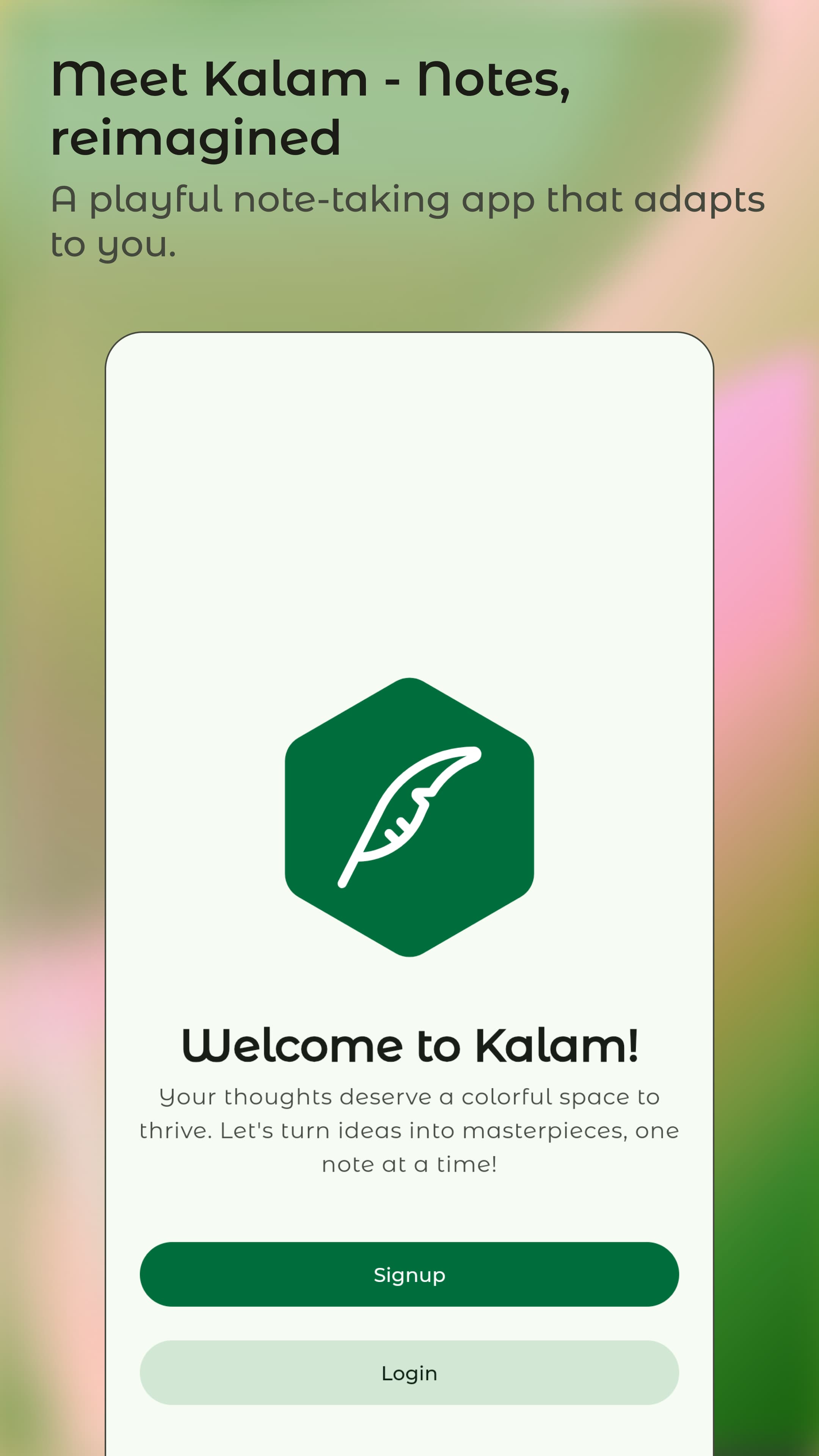
Kalam is an offline-first note-taking application designed for instant capture and long-form structured writing. Notes are stored locally for speed and reliability, organized through folders and tags, and composed using a flexible block-based editor that scales from quick ideas to complex documents.
Offline-first
Block-based editor
Local-first performance
Encrypted backups
4.8/5
2,272+
Screenshots
Tech Stack
Flutter
Used to build and maintain cross-platform mobile apps with predictable performance.
Firebase
Managed backend services for auth, data storage, messaging, and analytics in mobile apps.
Hive DB
Local persistence layer for Flutter apps, optimized for fast access and offline usage.
Stacked
Architecture layer for structuring Flutter apps with clear separation of concerns.
Context
Most note-taking apps optimize for one of two extremes:
either fast capture with limited structure, or powerful organization that introduces friction during everyday use.
In practice, this leads to inconsistent behavior. Users capture fewer notes over time because quick thoughts feel costly to record, while longer notes require workarounds to stay organized.
Kalam was built to resolve this tension by combining instant, offline capture with a system that supports structured, long-form content without slowing users down.
Problem
The core problem was designing a note-taking system that remains fast at the moment of capture while still supporting complex, structured notes over time.
Key constraints:
- Notes must be accessible instantly, regardless of connectivity
- Data entry must remain low-friction for short notes
- The system must scale to long, structured documents
- Organization should feel optional, not mandatory
- Performance must remain predictable with large local datasets
Most existing tools solved only part of this problem.
Approach & Architecture
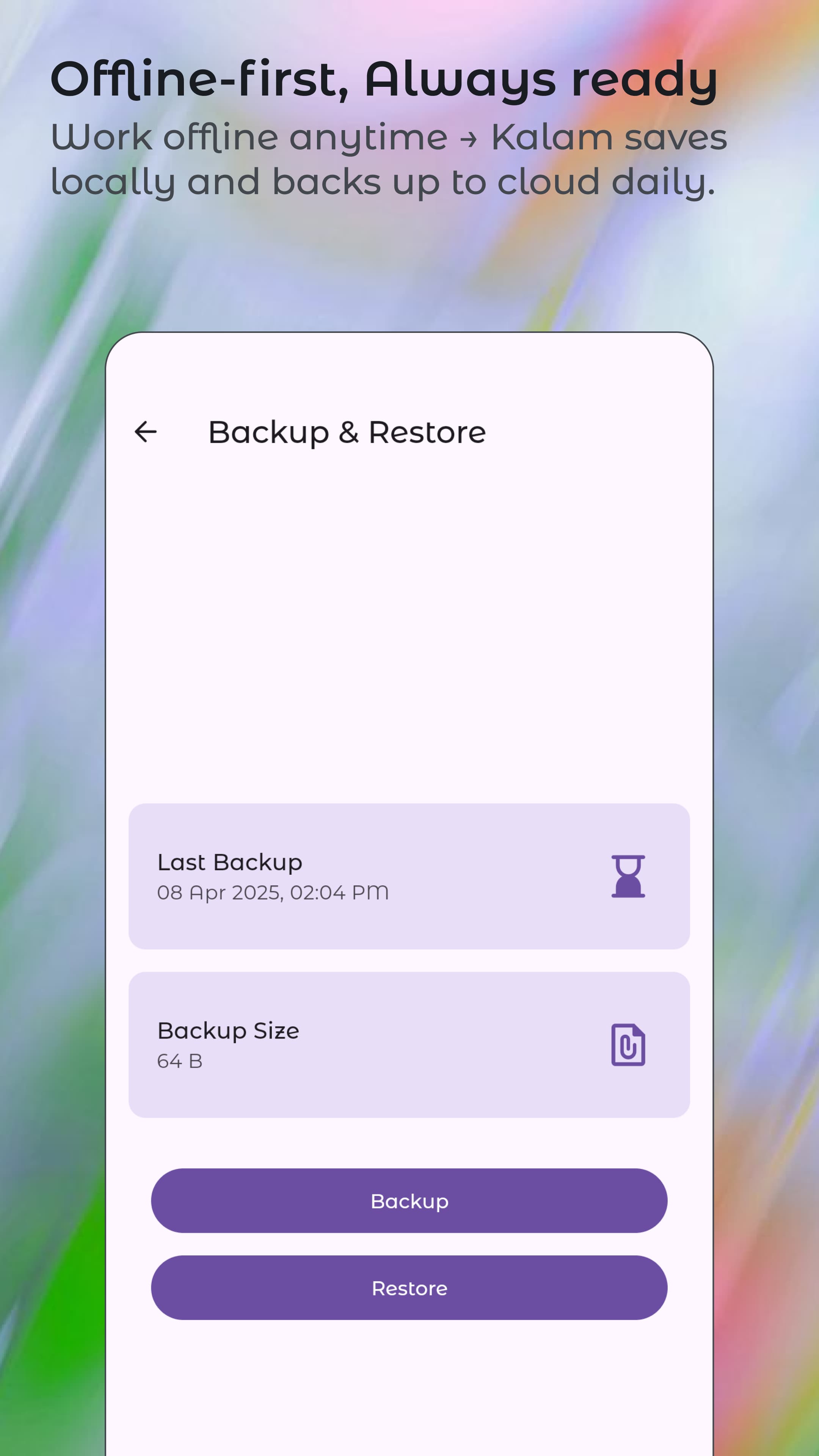
Kalam was designed as a local-first system, with all notes stored on device to guarantee speed and availability. Cloud functionality is limited to encrypted backups rather than real-time syncing, reducing complexity while preserving data safety.
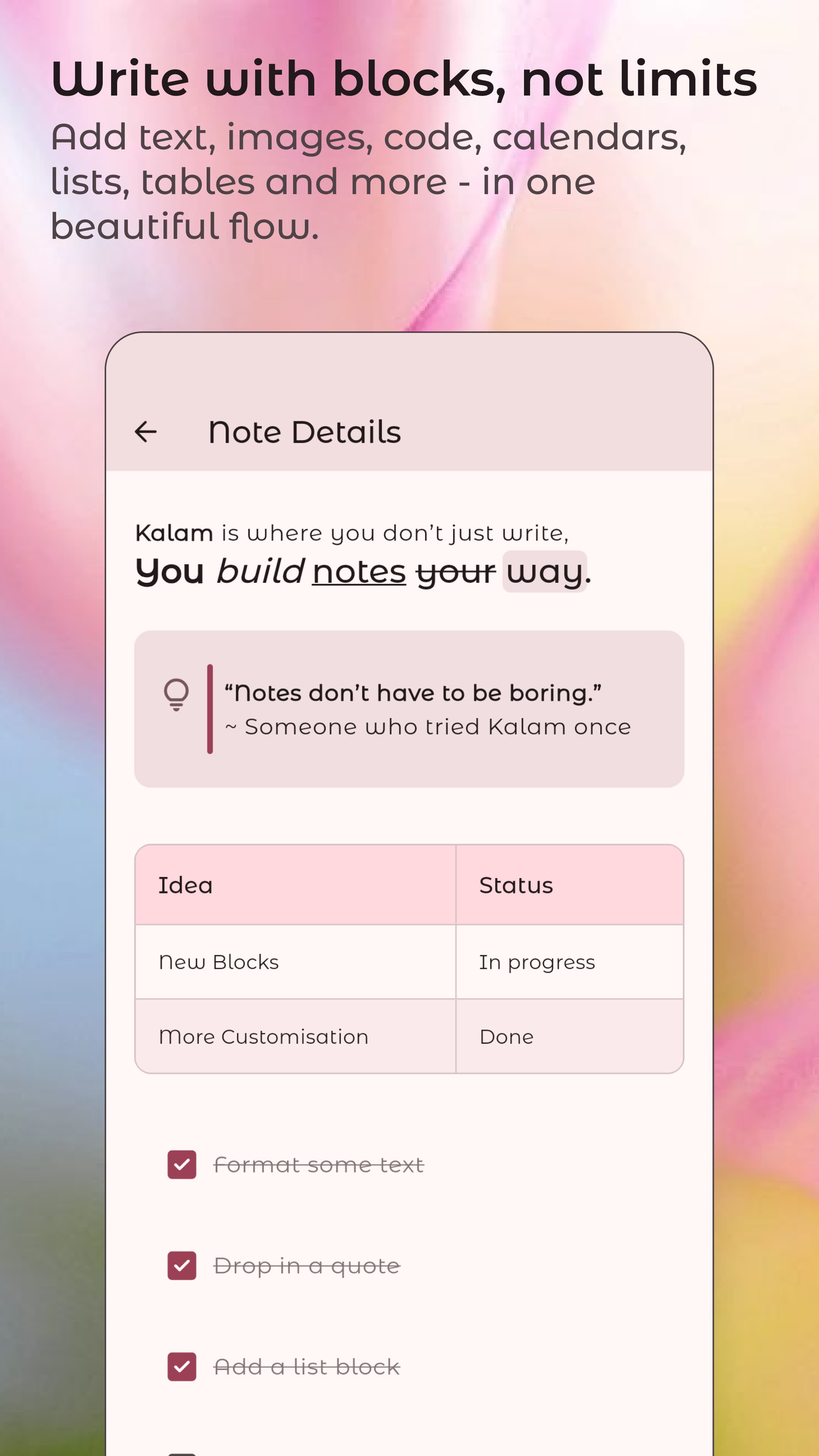
To support both simple and complex content, notes are composed using a block-based model. Each block represents a specific content type, allowing users to structure notes incrementally instead of committing to a rigid format upfront.
The architecture emphasizes:
- separation between UI, note structure, and persistence
- predictable performance regardless of note size
- extensibility for new block types without rewriting existing notes
This allows quick capture to remain lightweight while enabling deep structure when needed.
Content Modeling with Blocks
Instead of treating a note as a single text document, Kalam models notes as ordered collections of blocks.
Blocks are designed around real usage patterns:
- plain text for fast capture
- lists and todos for planning
- code and expandable sections for technical or dense content
- tables and calendars for structured information
Because blocks are composable, users can evolve a note naturally over time, from a single line into a detailed document, without changing tools or workflows.
Organization & Personalization
Organization is intentionally flexible.
Users can combine:
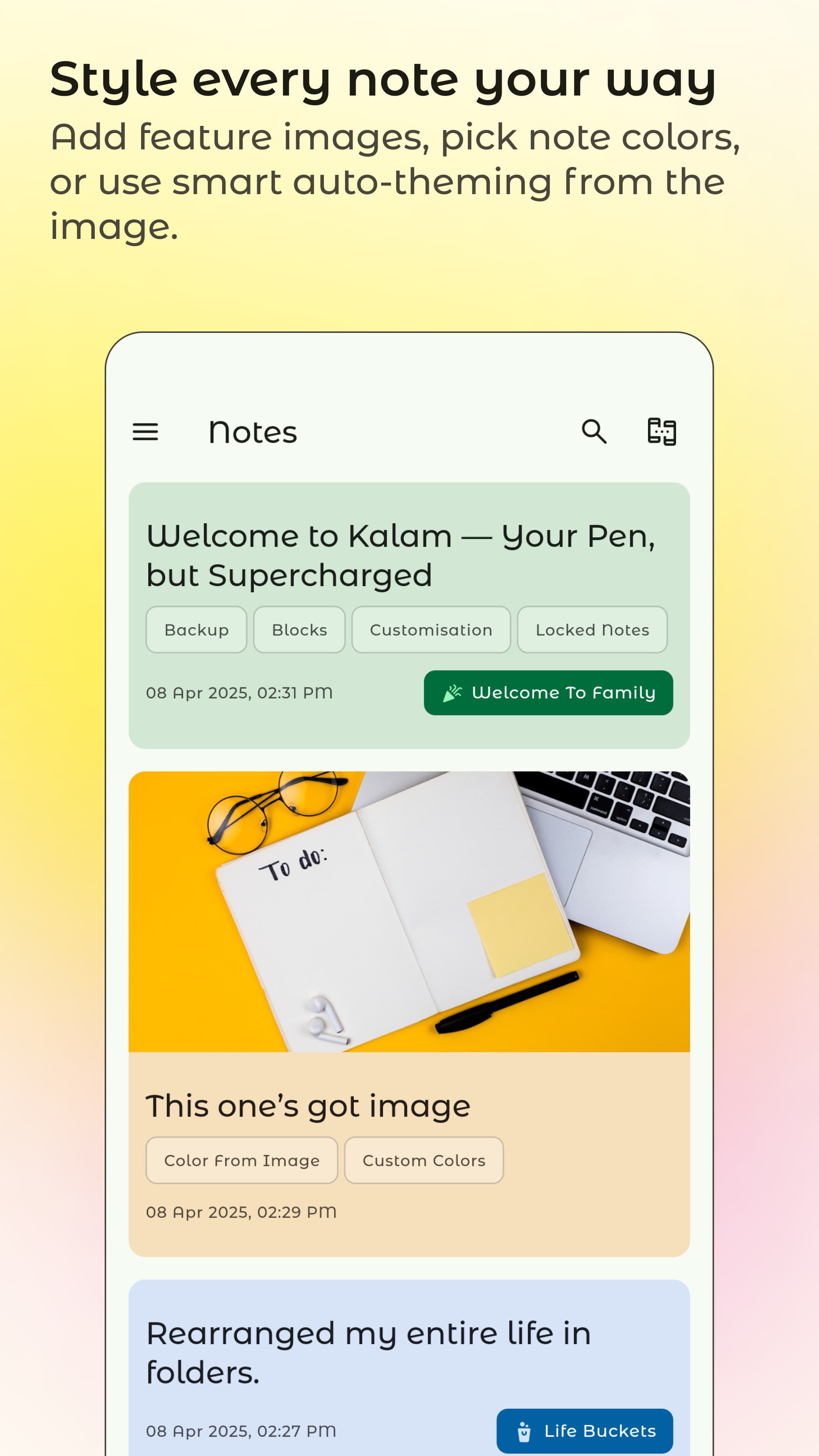
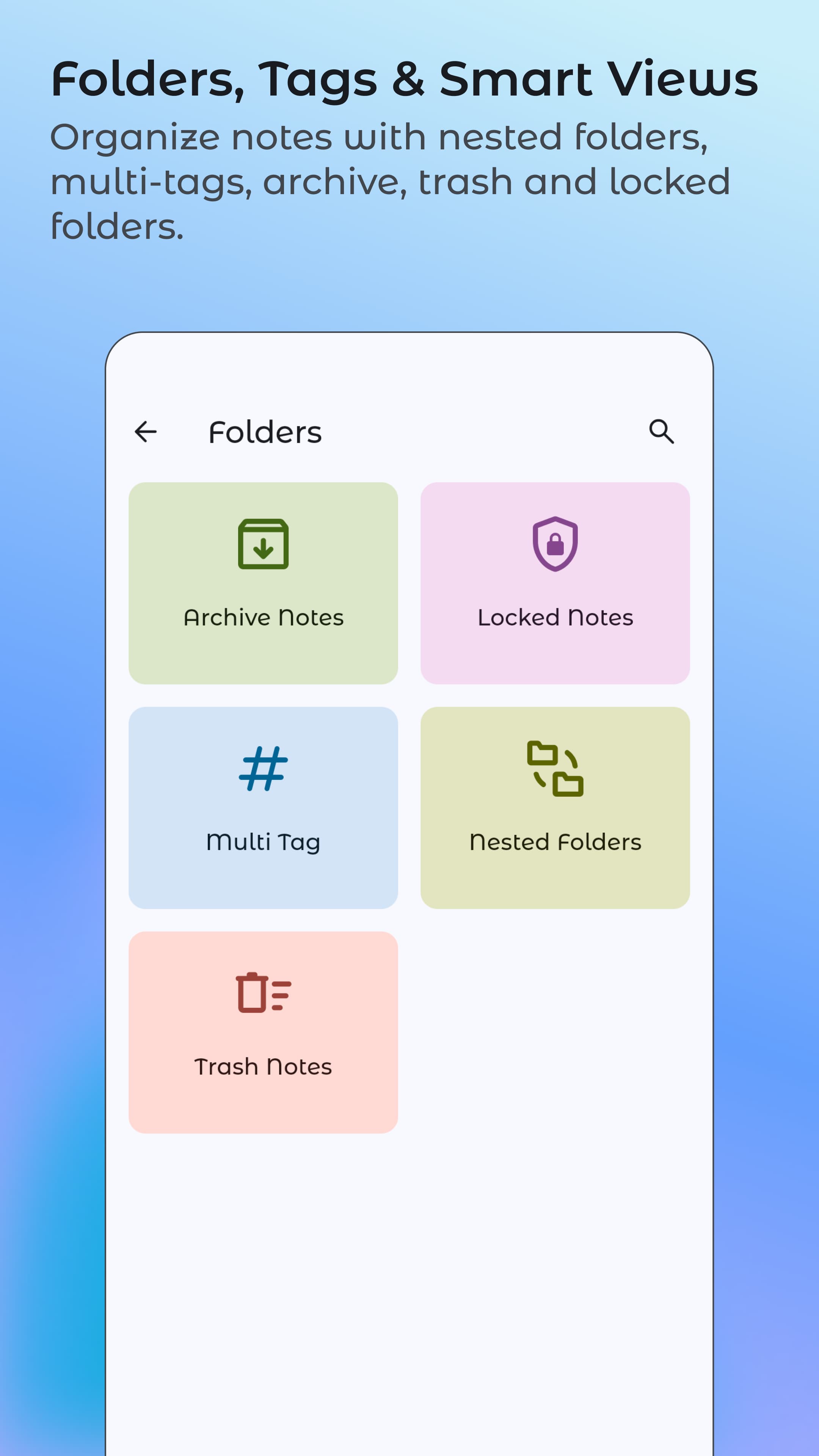
- folders for hierarchical structure
- tags for cross-cutting classification
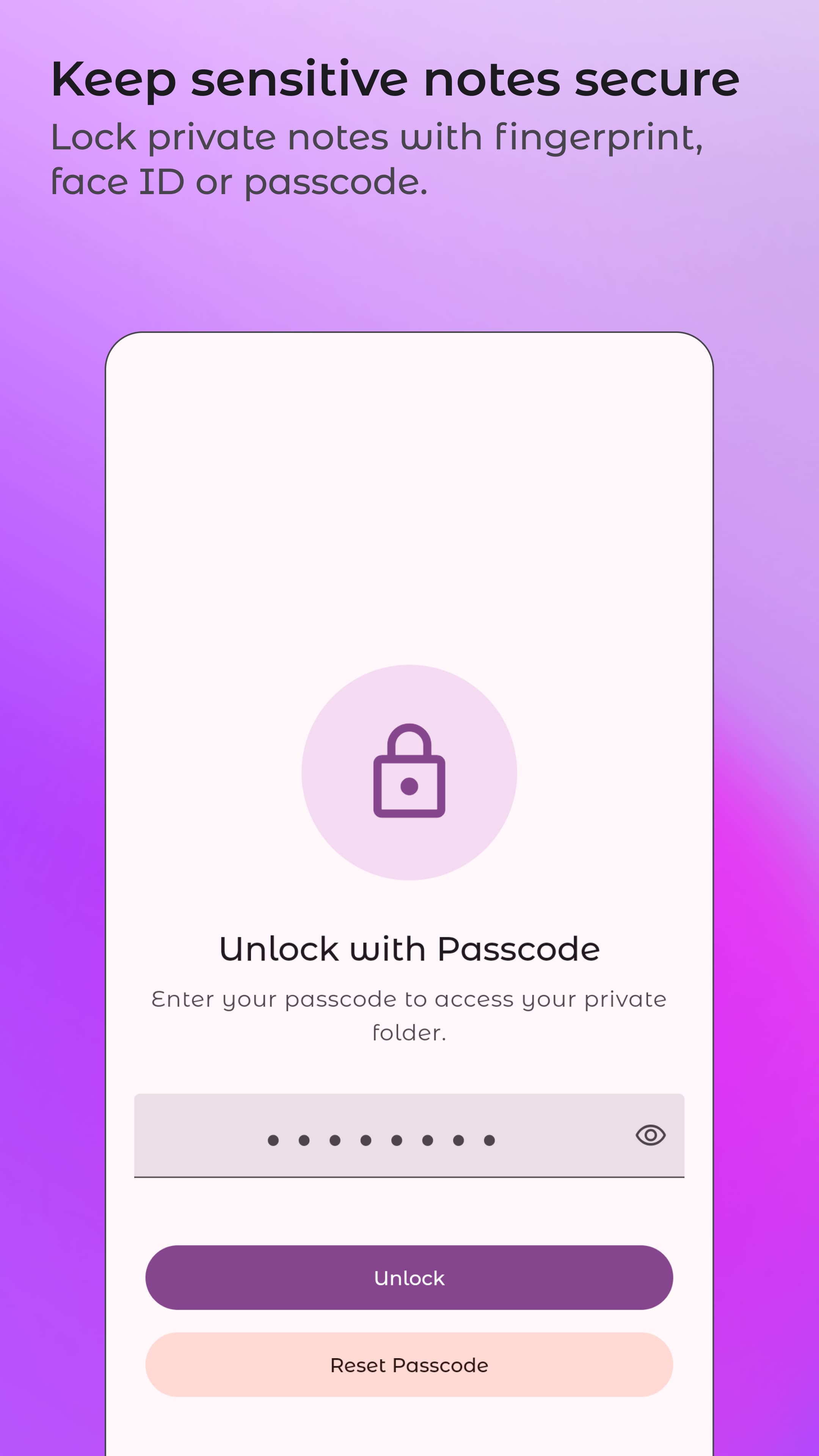
- special folders for archive, trash, and locked notes
Personalization is treated as a functional feature rather than decoration. Visual customization helps users recognize notes quickly and reduces cognitive load when navigating large collections.
Theme, color, and typography options are designed to remain lightweight and not impact performance or readability.
Sharing & Data Control
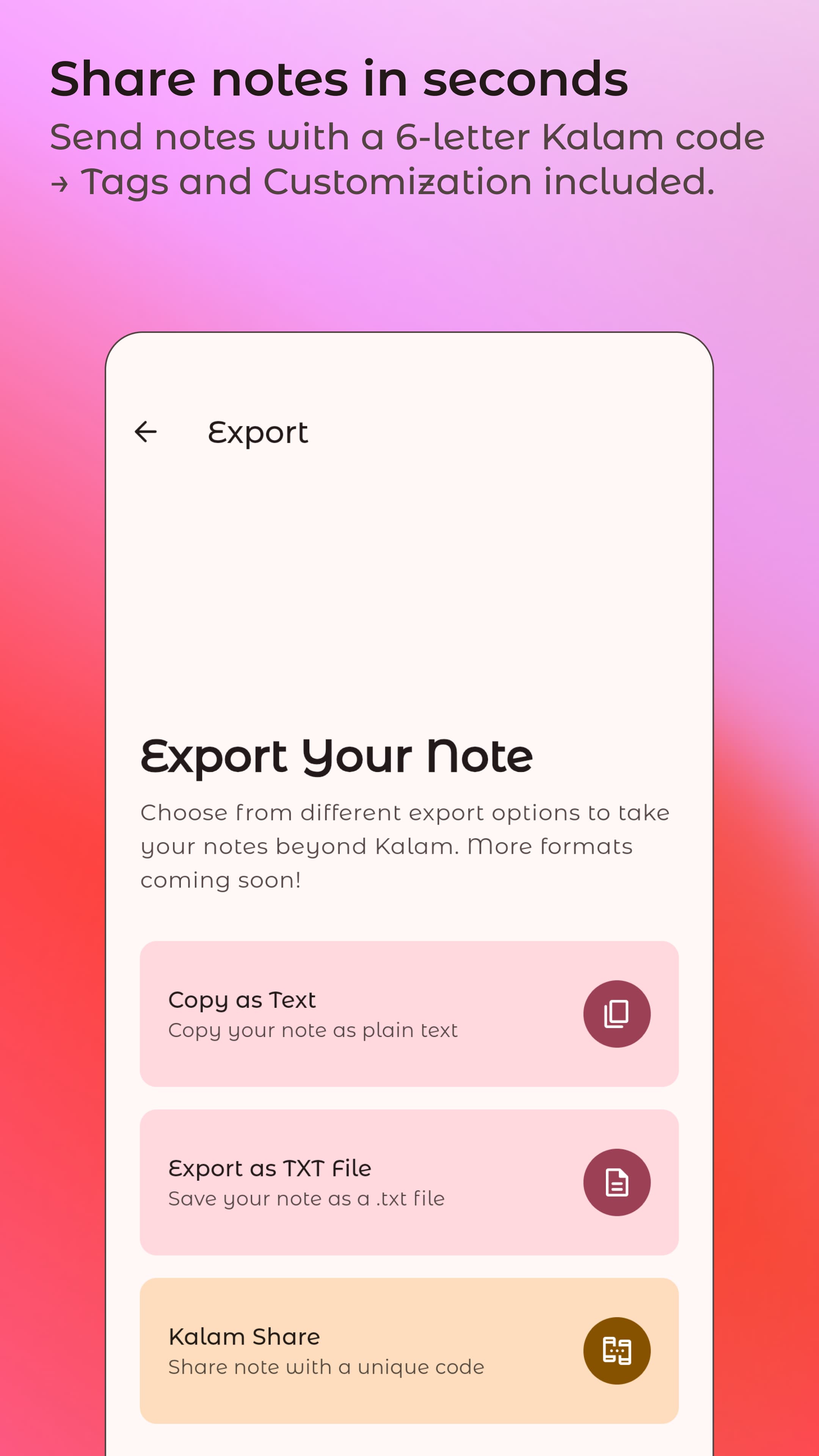
Kalam supports multiple ways to move content out of the app without locking users into a proprietary system.
Notes can be:
- copied as plain text
- exported as text files
- shared between Kalam users using a short transfer code
Shared notes preserve structure and metadata, allowing collaboration or migration without manual rework.
All backups are encrypted before leaving the device, and restores remain fully user-controlled.
Outcomes
- 2,250+ installs with organic growth
- 4.8★ average rating on the Play Store
- Strong qualitative feedback around speed and reliability
- Consistent performance with large, locally stored note collections
Kalam is used as a daily note-taking tool rather than a temporary capture app, validating the balance between speed and structure.
Trade-offs & Lessons
- Chose encrypted backups over live sync to reduce complexity
- Limited automation to avoid unpredictable behavior
- Prioritized local performance over cross-device features
If revisiting early versions, I would introduce schema migration tooling sooner to simplify long-term evolution of block types.
What our users say
2 Jan 2025
Runs smoothly, works fully offline, and feels reliable for daily note-taking. The dynamic theme is a nice touch.
Manohar Gantasala
23 Mar 2024
The block system makes organizing different kinds of notes easy without slowing things down.
Ayaan Ali
12 Jul 2023
Very useful for regular notes. Simple to use, but still powerful.