Offline-first personal expense tracking app with structured modeling
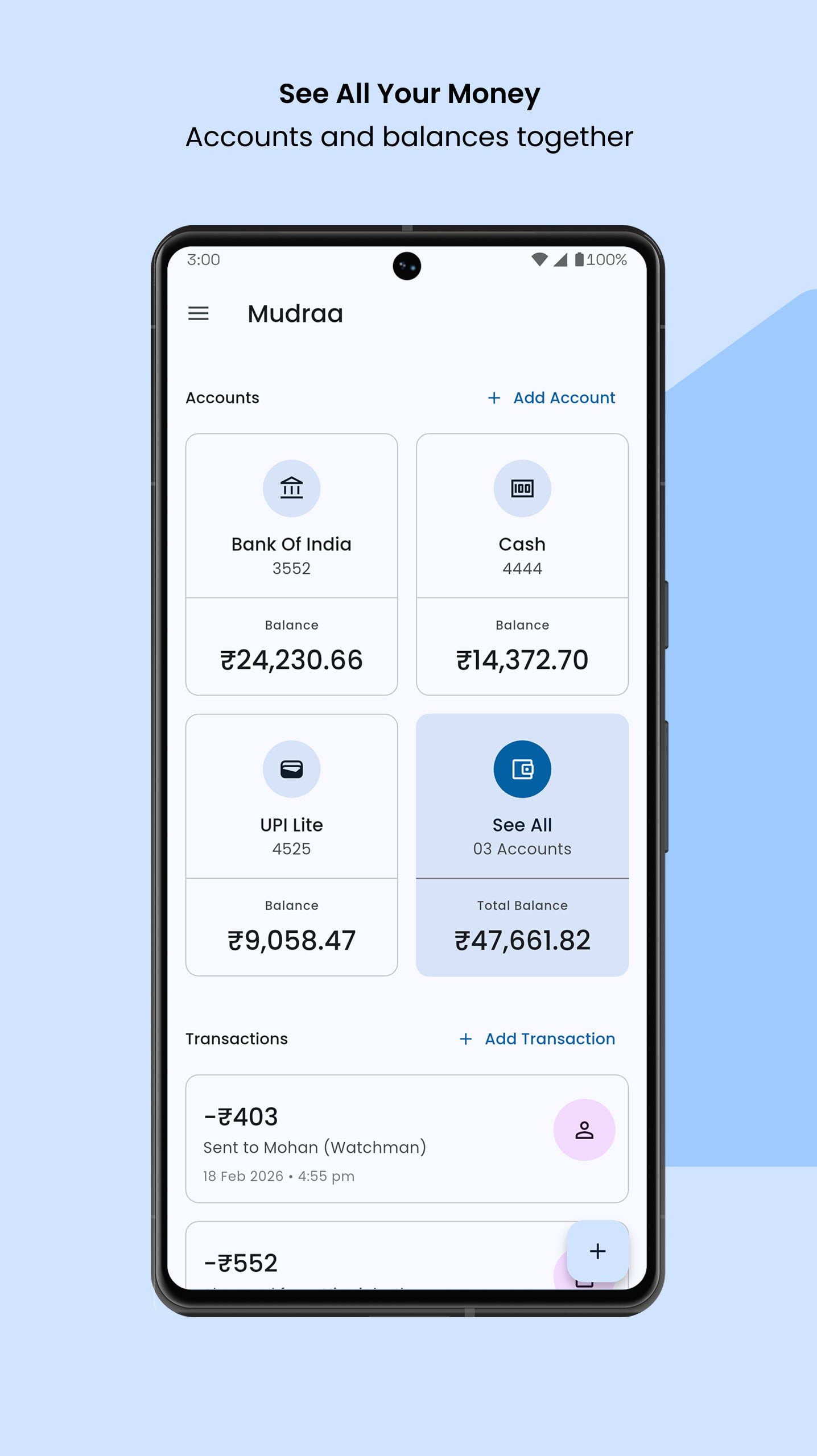
Mudraa is an offline-first personal finance application built around real-world financial entities such as accounts, people, and stores. Instead of flat expense entries, it models transactions through structured relationships to reduce friction, improve clarity, and keep performance instant as data grows.
Offline-first
Structured transactions
Local-first performance
Logic-based suggestions
5/5
242+
Screenshots
Tech Stack
Flutter
Used to build and maintain cross-platform mobile apps with predictable performance.
Firebase
Managed backend services for auth, data storage, messaging, and analytics in mobile apps.
Hive DB
Local persistence layer for Flutter apps, optimized for fast access and offline usage.
Stacked
Architecture layer for structuring Flutter apps with clear separation of concerns.
Context
Most personal finance apps assume users are comfortable with manual data entry, financial terminology, and abstract categorization. In practice, this creates friction and leads to abandonment.
Real-world spending is contextual:
- money is paid from somewhere
- to someone or somewhere
- through a familiar routine
Mudraa was built to reflect this reality while remaining fully usable without internet connectivity.
Problem
The core problem was enabling fast, repeatable expense tracking without requiring users to think in financial abstractions.
Key constraints:
- Users do not want to manually type repetitive data
- Expense tracking must remain usable offline
- Insights must stay understandable without complex dashboards
- Performance must remain instant with growing local data
Most existing apps optimized for features rather than behavior.
Approach & System Design
The application is built on a local-first, entity-driven model.
Instead of flat expense records, transactions are structured around three primary entities:
- Accounts: cash, bank, wallet, loans, or external accounts
- Persons: individuals money is sent to or received from
- Stores: real-world purchase locations with reusable items
This structure allows transactions to mirror how users naturally think about spending.
The architecture prioritizes:
- local storage as the source of truth
- predictable performance
- minimal user input for repeated actions
Stacked (MVVM) was used to enforce separation between UI, business logic, and data handling as the feature set expanded.
Transaction Modeling
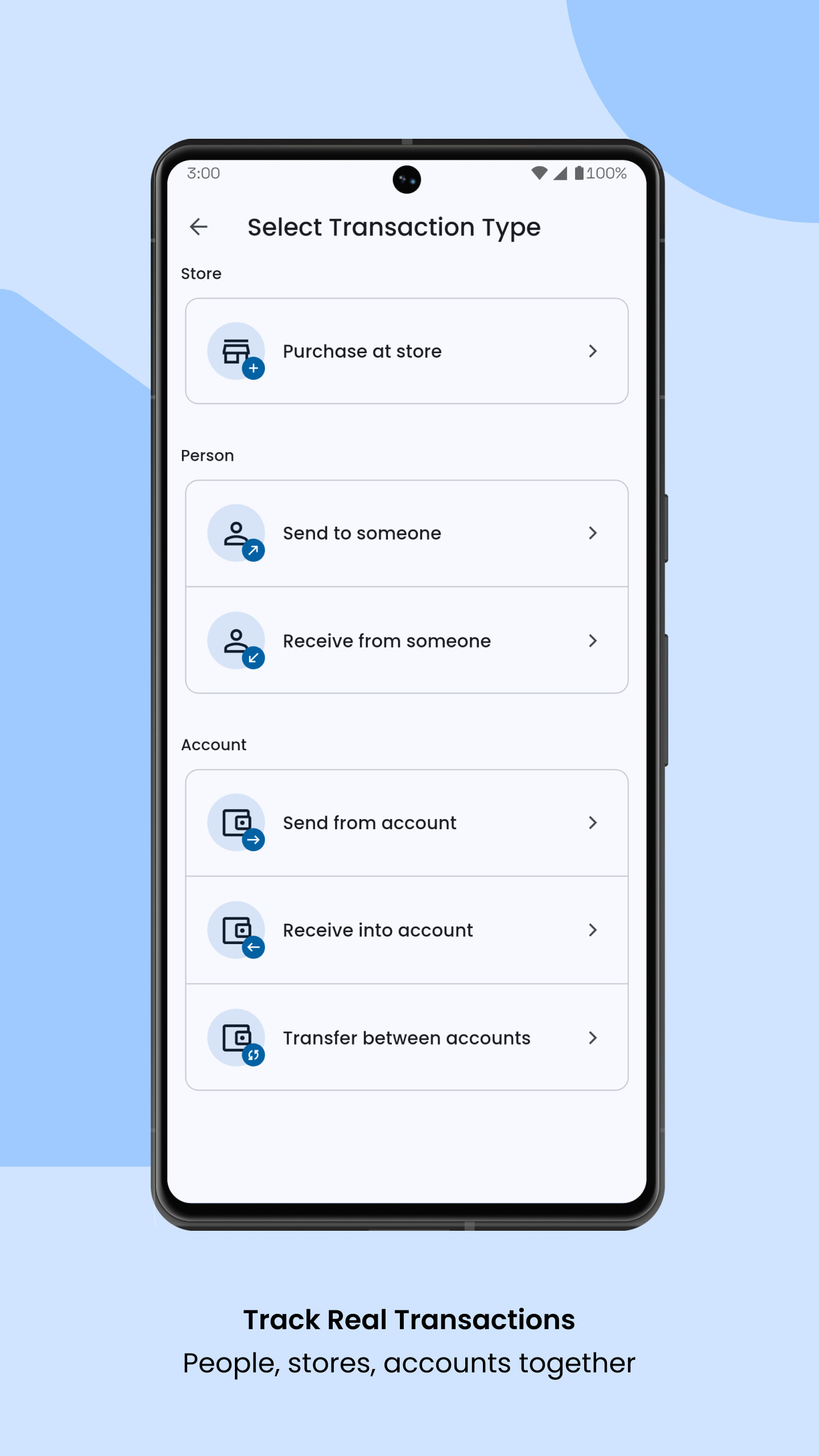
The system supports three explicit transaction flows:
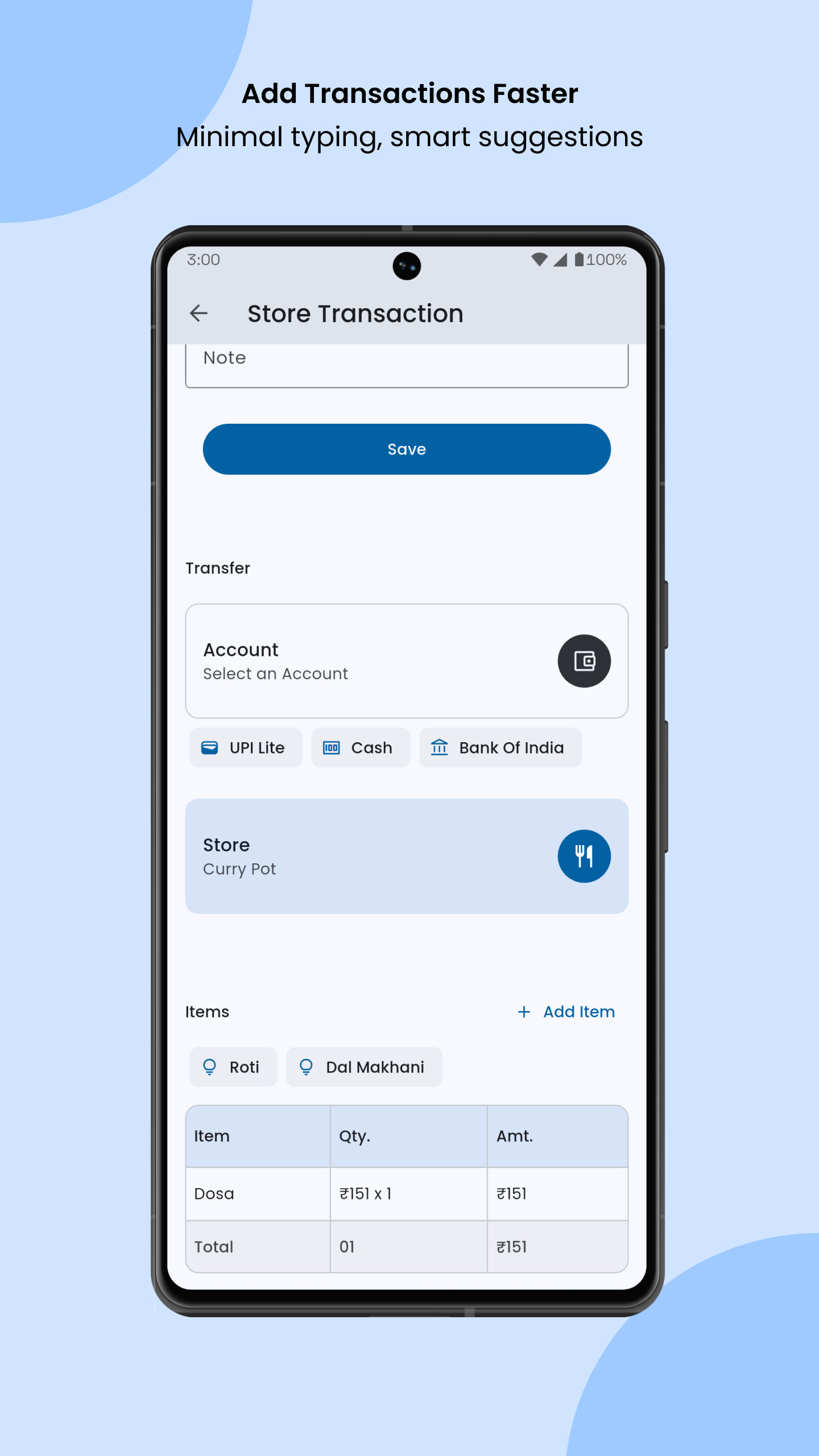
Store-based purchases
- Select store and predefined items
- Quantities auto-calculate totals
Person-based transfers
- Send or receive money
- Manual amount entry with context
Account transfers
- Move funds between internal or external accounts
Each transaction supports:
- custom amount handling
- date and time selection
- optional notes for traceability
This structure reduces friction while maintaining accurate records.
Smart Suggestions
To minimize input effort, Mudraa includes logic-based suggestions, not AI models.
Suggestions are generated using:
- frequency of past usage
- recency and time context
- transaction patterns
Stores, items, accounts, and people adapt over time, allowing faster entry without sacrificing control or transparency.
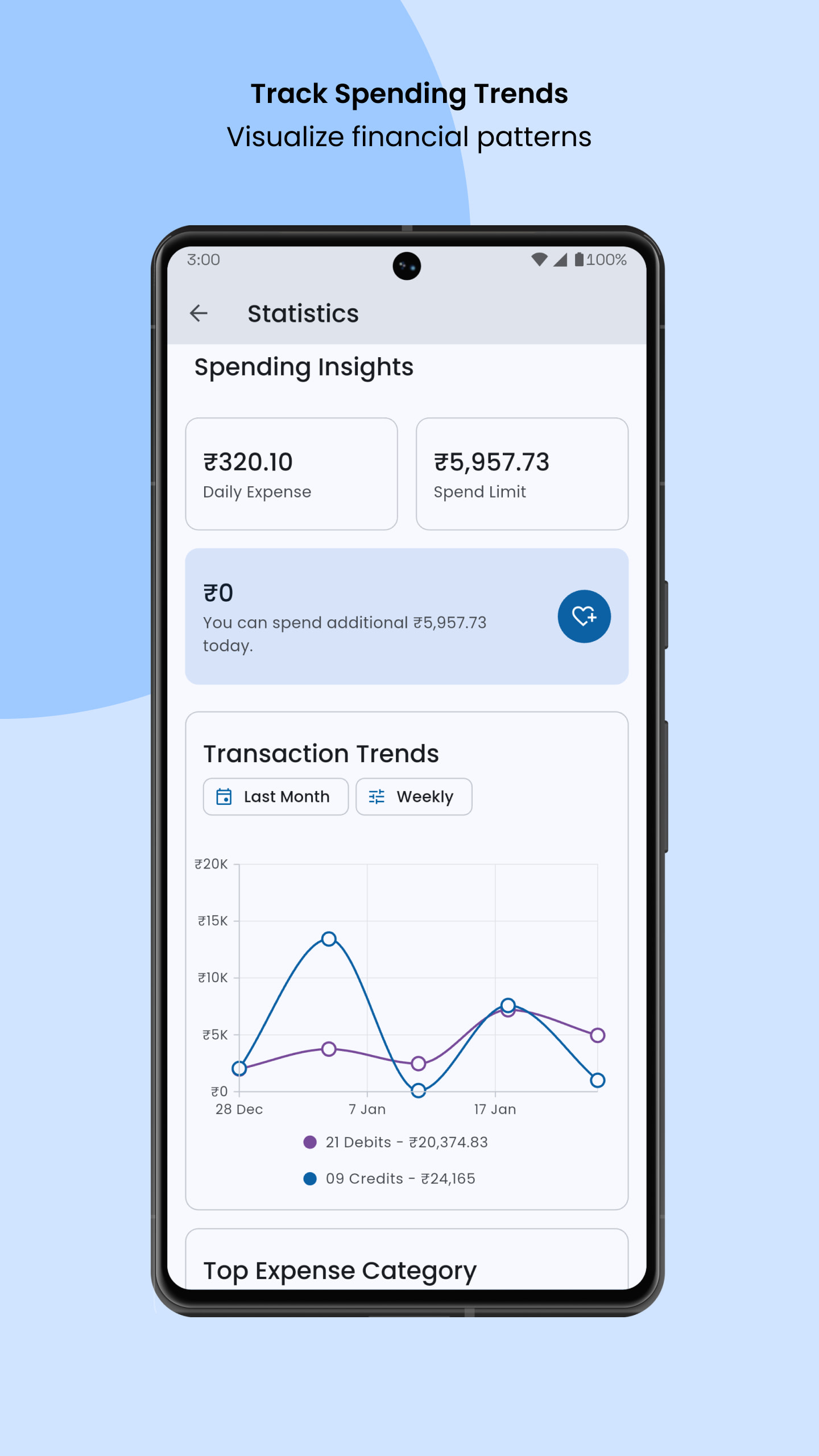
Insights & Feedback
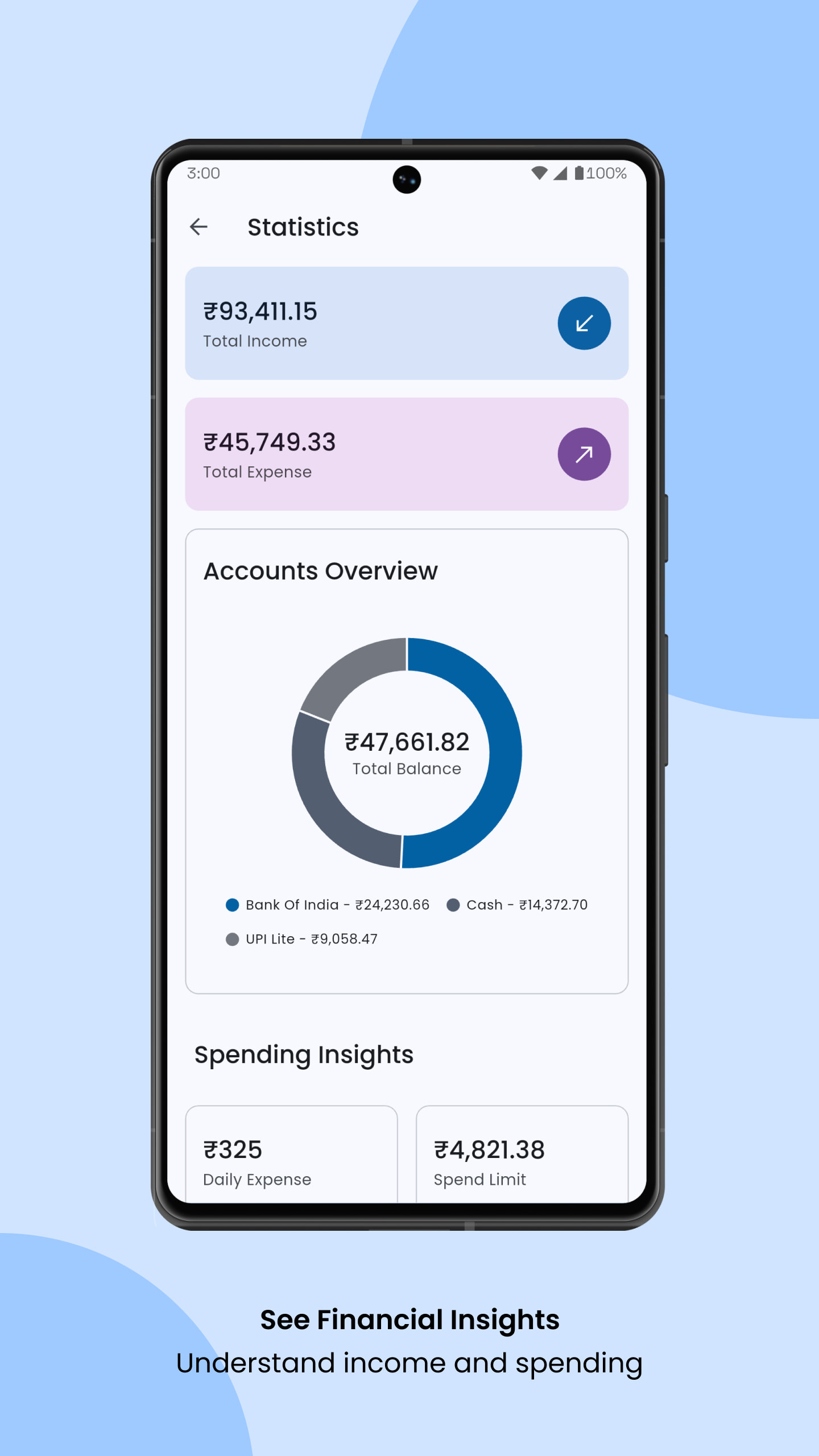
Insights focus on clarity rather than volume.
Key views include:
- income and expense totals
- account balance distribution
- spending health states based on daily limits
- debit and credit trends over time
- top spending categories
All visualizations are designed to remain understandable at a glance without financial expertise.
Outcomes
- Consistent 5★ rating from active users
- Valued for speed, clarity, and realistic structure
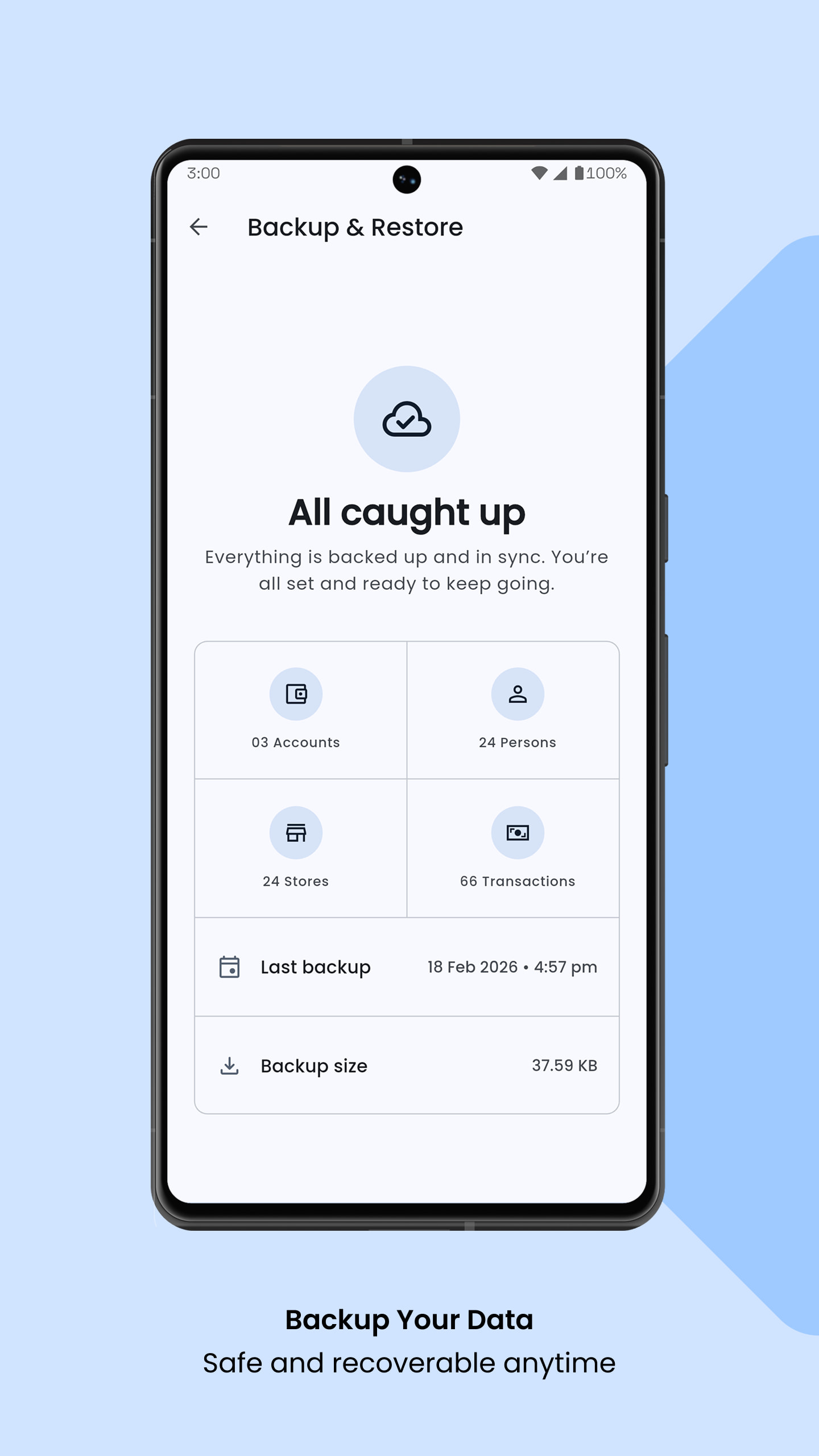
- Fully usable offline with encrypted backups
- Stable performance with large local datasets
Mudraa evolved through multiple iterations into a reliable personal finance tool aligned with real-world usage patterns.
Trade-offs & Lessons
- Chose structured modeling over flexible free-form entry
- Limited feature expansion to preserve clarity
- Prioritized instant performance over advanced analytics
If revisiting early versions, I would formalize migration strategies sooner to simplify long-term schema evolution.
What our users say
11 Nov 2024
Provides a clear overview of spending and helps maintain balance. Regular use made tracking expenses easier.
Aseer Ahmad
23 Feb 2024
Very helpful for managing personal finances.
Adnan Shaikh
27 Dec 2022
Organizes transactions in a structured way and makes expense tracking simpler.